The bounty has been so wonderful Glenn has wanted to share it with you all! The weekly boxes are exceeding the value of your CSA subscription and making it such an awesome value this year. Yeah! This week we continue to enjoy the corn, blueberries, tomatoes, lettuce, cukes, squashes, eggplants, peppers, peaches, your choice of greens, potatoes, onions… There may be a little gap in the lettuce, so it may or may not be in your box. If not, I will try to send it along as an option. I think our son Reid would go into withdrawal if there was no lettuce in the house for a week;) Sunday night I returned home from BPM at 11:30 to find a nice salad, complete with lemon cukes, waiting for me in the fridge. Good boy!
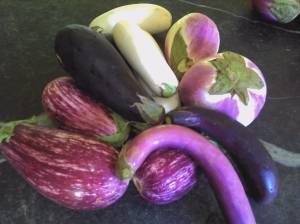
The eggplants are coming in and you may see the long, skinny Asian types first. These are marvelous grilled or sautéed up with some summer squash and a tomato. We grow dark purple, magenta, white and green and all of them are lovely.
About Peppers
We grow a lot of peppers. The peppers are coming along, so you’ll be seeing the regular green bell peppers, but you will surely see some other varieties during the season. There are lots of ways to categorize peppers: sweet peppers, hot peppers, specialty hot, specialty sweet, ethnic peppers and of course, ornamental. What’s what? Just put the ornamental peppers out of mind for now, other than to imagine exotic looking plants in containers and bouquets. For sweet bell peppers, we have green, lavender, purple, chocolate, ivory, orange, gold and red. Most of the bell peppers will ripen to red (there’s no strictly red pepper). We do grow a pimento shaped sweet pepper that ripens red very early, the rest of the colored peppers come along later in the season. We also grow those adorable lunchbox, snack size bell peppers J
There are also several long sweet peppers: Cubanelle which are long and light green, turning orange and then red; Spanish Spice/Carmen which are long and medium green then turning a vibrant red; and Mama Mia a Golden yellow Italian fryer.
The hot pepper lineup is a little more complicated: Mole are long, skinny, very mild heat and very dark green; Pablano(green)/Ancho(red) are medium hot, heart shaped and very dark, shiny green (pablano) and turning brick red later (ancho); Numex Joe Parker an Anaheim; Hungarian Wax are medium hot (but hotter than the pablano), elongated and smooth yellow-dark orange; Cherry Bomb are hot green to red and cherry shaped; Jalapeno are hot, dark green-purple-red, pointy sausage shaped; Serrano are hotter, smoother and more elegant looking than the Jalapeno; Cayenne are hot-hotter, very long, slender, wrinkly, green-red; Thai Dragon are smaller than cayenne, slender and about 3” long, Habanero are super-hot, wrinkly lantern-shaped, lime green-orange-red, and finally, the Ghost pepper, the hottest of the hot. There’s probably a few I am missing, because we love to experiment and we also trial plants for a few seed companies. *The hotter, drier and sunnier the weather, the hotter the peppers.
Uncle J’s Super Roasted Tomatoes (from member Debbie)
Cut ripe tomatoes into halves (small tomatoes) or thirds (large tomatoes) along the midline, not through the stem.
Arrange tomatoes on cookie sheet and sprinkle each with a pinch of salt, some thyme and some rosemary. Drizzle on a little balsamic vinegar and olive oil. Add a thin slice of fresh garlic clove on each.
Roast at 325 degrees for about 1.5 hours, or until they shrink in half and look done. They will be very soft and extremely delicious.
You can line the cookie sheet with parchment paper to make it easier to clean.
Vegetale al Forno this is a super yummy and a nice one dish meal of squash, eggplant and tomato. It is a great side dish with meat.
*this is delicious! A couple notes, it really needs to cook for a good long while, to ensure everything is super soft and tender and it is not soupy. I advise against using skim Swiss because it will remain tough and rubbery after this baking process 😉 I use Gruyere 🙂
Farm Dirt
We usually have a potluck at the New Braintree farm August 17 at noon. After last year, I had considered dropping it, because, though there seems to be a lot of interest, the turnout is not very significant considering the size of our membership. Lots of members do show up at some point during the season, just not necessarily for the open house/potluck 🙂
Glenn suggests I leave it up to you! Please weigh in if you were planning on coming to the potluck. If you have never been, we cook corn, slice tomatoes, hang around and visit, walk the farm a little, pick berries… It’s pretty low key.
Meanwhile, Glenn is out scouting the farm right now and I look forward to the update about what’s coming and what’s new for this week. The onions they are pulling are gorgeous and plentiful. The apples are sizing up, and I saw some melons come through the other day and the one I ate was delicious!
Eat well,
Geneviève Stillman



 Stillmans Farm Blog